


- Koguryo and Balhae
- Anak Tomb No. 3
Koguryo and Balhae


| Title | Eastern Wall of the Eastern Auxiliary Chamber - Kitchen - Figures 1 | ||
|---|---|---|---|
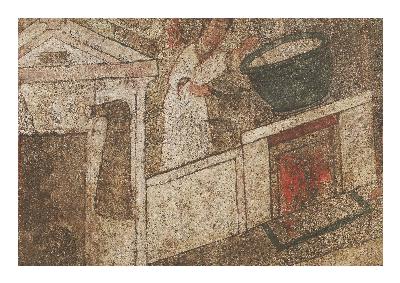
Eastern Wall of the Eastern Auxiliary Chamber - Kitchen - Wood Burning Stove
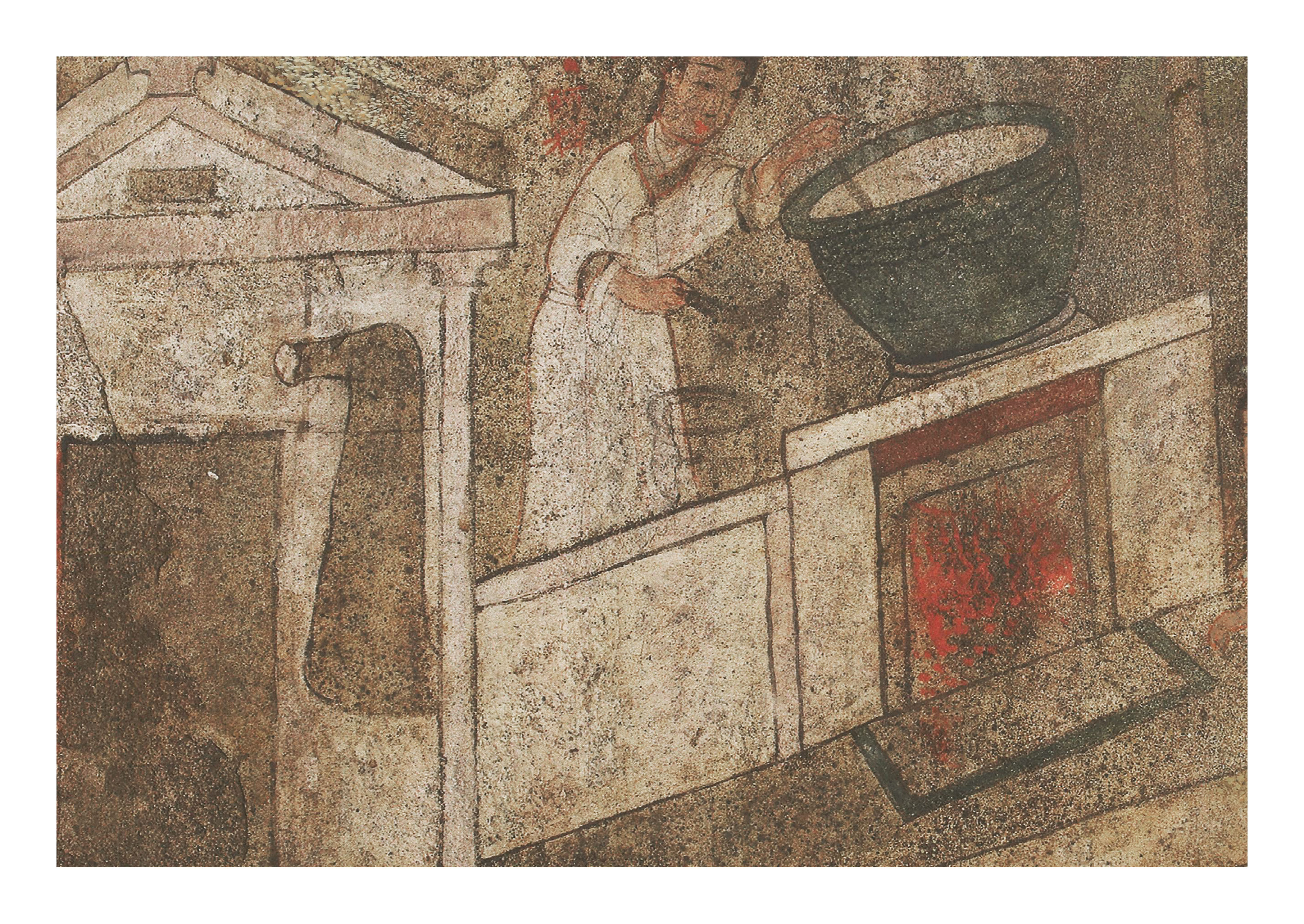
This is a detailed view of the wood-burning stove, attached furnace, cauldron, and steamer depicted on the eastern wall of the eastern auxiliary chamber. A furnace can be seen underneath the long, rectangular wood-burning stove on which steamers or cauldrons were used for cooking. The smoke generated in the furnace was designed to flow out of the round, L-shaped chimney installed through the stove and out of the side wall. This type of wood-burning stove was common in the Koguryo era, and a very similar example can be seen in the National Museum of Korea, allowing for a glimpse into the style and technology of that era.
A closer inspection of the image reveals an iron cauldron below the wide-mouthed steamer. The steamer is decorated with three lines wrapping around the entire shape. The shape itself is very similar to steamers used today. Unlike modern-day Korea where rice is dominant, common staple foods of Koguryo era diets included millet, beans, barley, wheat, and sorghum. These grains are surmised to have been steamed and eaten by using steamers such as the one depicted in the image. Iron pots and steamers are common among the Koguryo-era relics excavated to date, giving credence to depictions of kitchens such as this mural found in Anak Tomb No. 3. Ondol (under-floor heating) systems are said to have been utilized in the Koguryo era, and this type of wood-burning stove with attached furnace may have been the precursor to the Ondol systems still in use today. This image may have captured a very exciting moment in history that connects ancient and modern life in Korea.